Stravinsky was a Russian pianist and composer and is regarded as a pivotal figure in the modernist era. His compositional output was abundant and hugely varied, but I focused on his ballets The Firebird (1910) and The Rite of Spring (1913), both of which he was commissioned to write by Ballet Russes, along with one other.
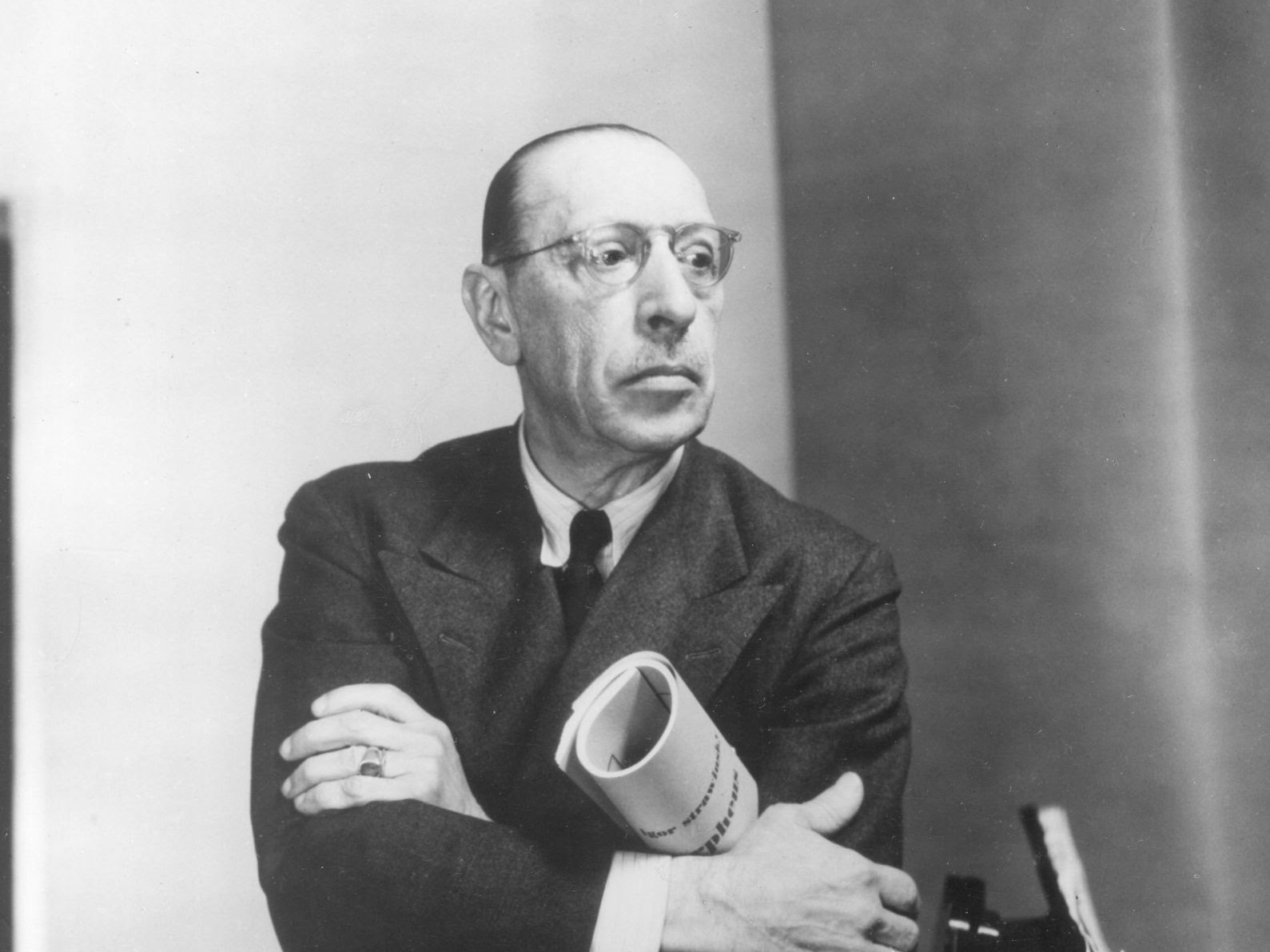
I find the music in each of these ballets fascinating because of their rhythmic nature. They are unlike anything I have heard before in this era, and I imagine that is why they were so ground-breaking for their time too.
Let’s take The Rite of Spring. You might have heard about this ballet. The first time it was performed in 1913, it induced a riot in the theatre! The work had some controversial choreography, and newspapers for years to come would report of ‘rhythms that have, at times, a well-nigh hysterical shock and fury.’1 There was a rhythmic force in The Rite of Spring that literally rose people out of their seats. Have a listen to this:
Intense, right? Or, try to count how many times the metre (time signature) changes in this movement:
Incredible!
For my university dissertation, I began to think about the parallels between Stravinsky’s music and the kind of music we might hear in a jazz club. This might seem random, but the work reminds me a lot of the syncopated, rhythmically stimulating themes that you might hear coming from a jazz musician. I wondered if there was any connection.
I was not the first to do this, it turned out. Many had written on the inherent ‘groove’ of The Rite of Spring and its structural connection to how a jazz band might play a standard. The work has a rhythmic theme that is ‘enjoying a life of its own within an unchanging vertical sonority.’2 Isn’t that the same as a jazz band, on a basic level? An element of rhythmic freedom, based on an unchanging core? I dug deeper, and I even found a band that had rewritten The Rite of Spring and released it in the jazz genre. Amazing!
My dissertation unpacked The Rite of Spring in more depth along with various re-writes by different jazz groups. It was difficult to deny the fundamental connections between them all. Rhythm and metre are core components of The Rite of Spring‘s identity, and perhaps speak a new language, a ‘new rhythm’, that we are still trying to understand.
All of this is to say that we, as entraining beings, are moved to the core by rhythm – so much so that we might rise out of our seat in the theatre! Stravinsky has been described as having an ‘earthy groove since birth’3, which I love. Rhythm is fundamental to our existence, and Stravinsky knew it too, because the rhythmic force in The Rite of Spring is phenomenal. Check it out, and dig deeper – it’s a treasure trove!
- Olin Downes, The New York Times, 1924, p.12 ↩︎
- Boulez, P. (1966) ‘Stravinsky Remains’ in Stocktakings of an Apprenticeship. Translated from French by Walsh, S. (1991) Clarendon Press. ↩︎
- Iverson, E. (2011) ‘Mixed Meter Mysterium.’ Available at https://ethaniverson.com/sonatas-and-etudes/mixed-meter-mysterium (Accessed October 1, 2024) ↩︎
 EB PIANO